


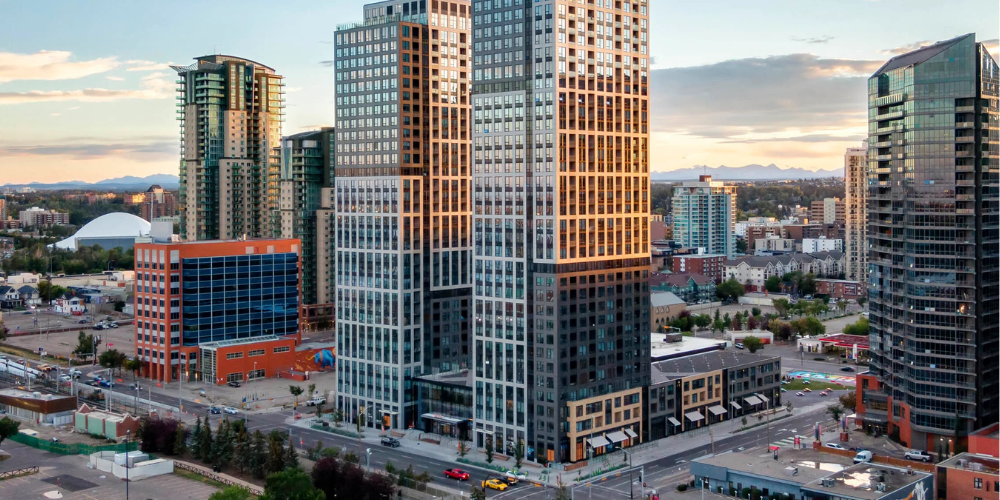
Calgary isn’t just growing — it’s evolving. The city’s skyline and urban fabric are being reshaped by a wave of mixed-use developments that are fundamentally altering how people live, work, shop and play. These aren’t isolated condo blocks or empty office towers — they’re fully integrated pieces of the city.
1. More Than Buildings — It’s About Urban Fabric
Mixed-use development blends residential, retail, office and public space into single projects. Think towers or blocks where people can live above grocery stores, grab coffee steps from their front door, work a few floors up and walk to transit without needing a car. That model breaks the old single-use zoning where homes, shops and offices were siloed into separate zones.
Municipal changes to zoning rules are making this easier. Calgary’s new zoning bylaw proposals aim to simplify mixed-use permissions and allow a wider range of uses in more places, reducing regulatory barriers for integrated developments.
2. Urban Cores Are Getting a Makeover
Downtown Calgary has long struggled with office vacancy and dead streets after business hours. Mixed-use developments are flipping that script:
- Converted office buildings are now residential with retail at street level, bringing life back to downtown blocks well into the evening. Example: older office towers, like the Petrofina Building, have been converted into residential units with street-oriented uses.
- Purpose-built mixed-use skyscrapers like Telus Sky (Calgary House) combine office, retail and residential in one footprint, anchoring activity around them and contributing to a more continuous urban experience.
3. Walkable Neighbourhoods Are Taking Shape
Communities from the East Village to Bridgeland and Marda Loop aren’t just adding density — they’re becoming complete neighbourhoods. Sidewalk activation, restaurants, parks and shops on the ground floor make these areas places people want to walk around in rather than drive through.
Small-scale mixed-use projects are also popping up in historically quieter areas like Bowness, aiming to transform main streets into walkable, amenity-rich hubs.
4. Transit and Sustainability Are Driving Demand
Calgary’s push for transit-oriented development plays into mixed use. Areas close to C-Train stations are especially attractive for integrated projects, reducing car dependency and encouraging public transit use.
These developments also align with sustainability goals. Compact, mixed-use neighbourhoods reduce commute times, encourage walking and cycling, and make efficient use of infrastructure — all key ingredients of a low-carbon urban future.
5. The Impact on Daily Life
- Lifestyle shift: More people want convenience — walking to errands or work instead of driving — and mixed use delivers it.
- Local economic boost: Street-level retail benefits from built-in foot traffic from residents and office tenants.
- Urban feel: Calgary is shedding its reputation as a commuter-centric city and gaining vibrancy through year-round activity in more neighbourhoods.
Calgary’s landscape isn’t just changing in form — it’s shifting in function and energy. Mixed-use development is the engine driving this shift, turning flat, single-purpose zones into layered, active environments. Whether downtown or in revitalized main streets, Calgary is betting on places that work for people first — and that’s changing the city for good.